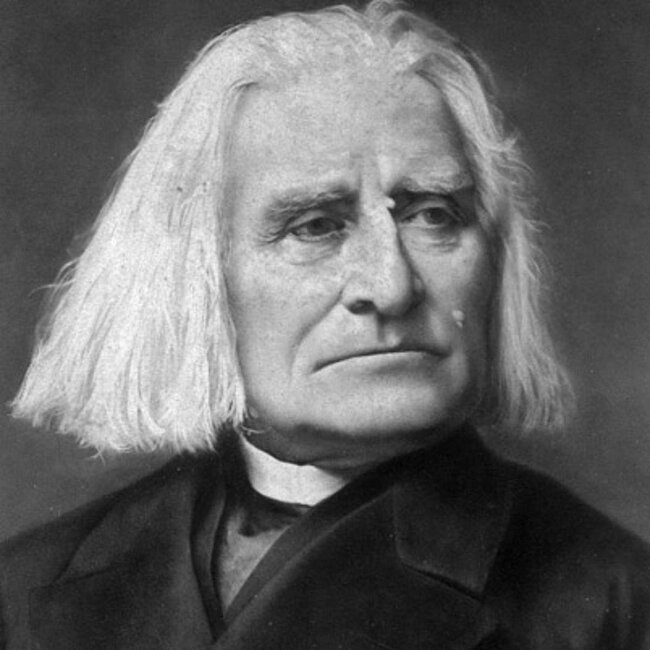

Franz Liszt was born in 1811 in the Hungarian farm village of Dobjan (or Raisting) and died in 1886 in the festival city of Bayreuth in the aura of his unloved son-in-law Richard Wagner. After a glorious career as a piano virtuoso, that took him all over Europe, he retired to Weimar. In this city of the "classicists" Schiller and Goethe, the polyglot pianist, composer and writer on musical subjects, sought to build on the impulse of Hector Berlioz´s programmatic symphonies and assume Beethoven´s symphonic legacy by combining poetry and music to create a genre of literature-inspired music called the "symphonic poem". With his works, Liszt, who in old age liked to wander about in priestly vestments, set off a vehement musical dispute, which raged on throughout the last half of the 19th century. The point of contention was the issue of whether the medium of music should be allowed to follow a poetic idea in the form of so-called "program music", or if this was alien and thus harmful to the concept of music as an autonomous art form.