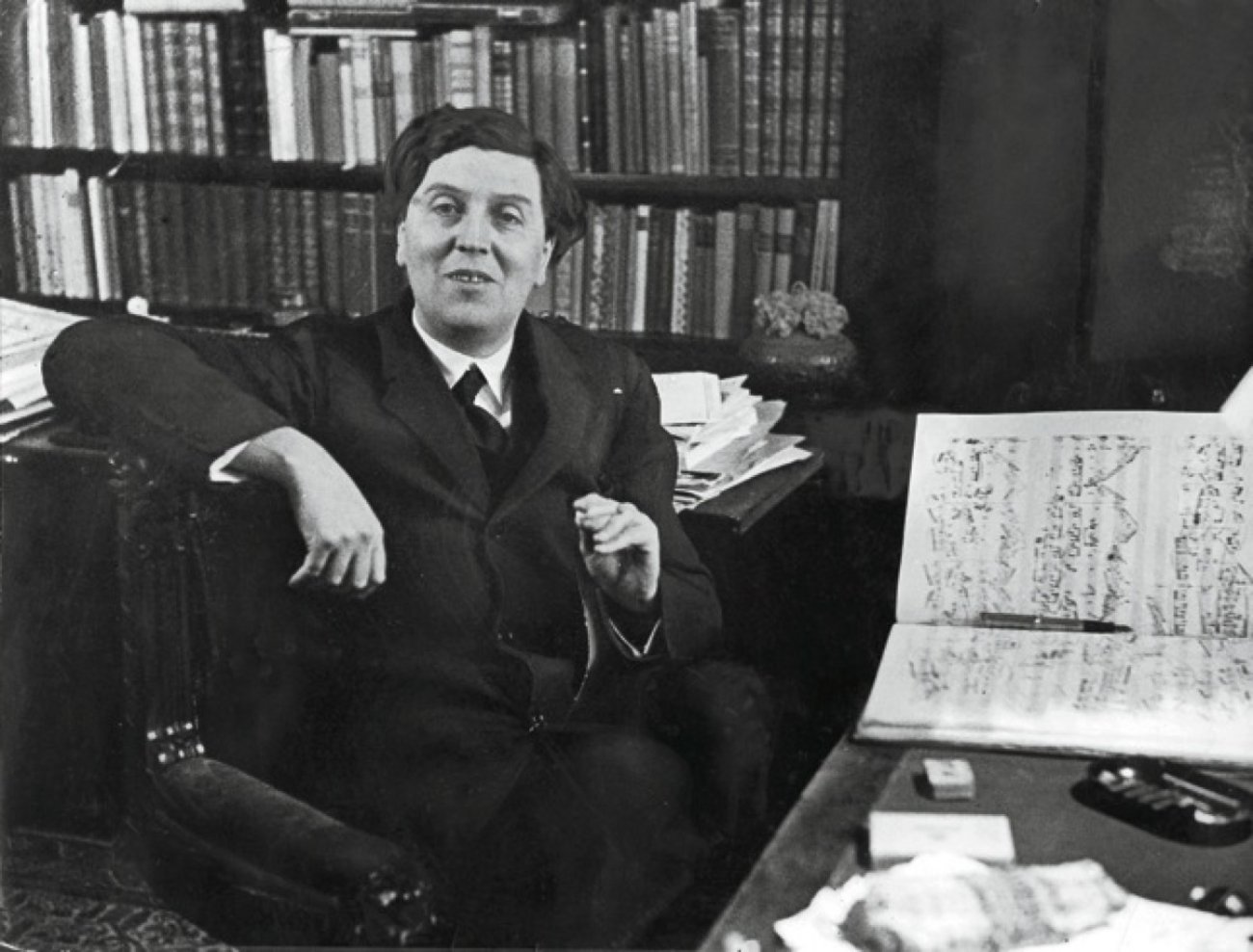
Along with Arnold Schönberg and Anton Webern, Viennese composer Alban Berg (born on February 9th 1885 in Vienna) was one of the main proponents of the "new music" before and after the First World War. Instructed in the twelve-tone technique by his teacher and friend Arnold Schönberg, he created works that made an unorthodox use of this technique, because, for all the strictures of twelve-tone music, Berg still sought to retain traditional tonal relationships and infuse his music with incredible expressiveness. With the 1922 world première of his opera "Wozzeck", which revolutionized our understanding of opera, Berg became a leading proponent of the musical avant-garde. After the Nazi take-over, Berg's works were denounced as "degenerate"; he was unable to complete his opera "Lulu" and died on December 24th 1935 in Vienna.